
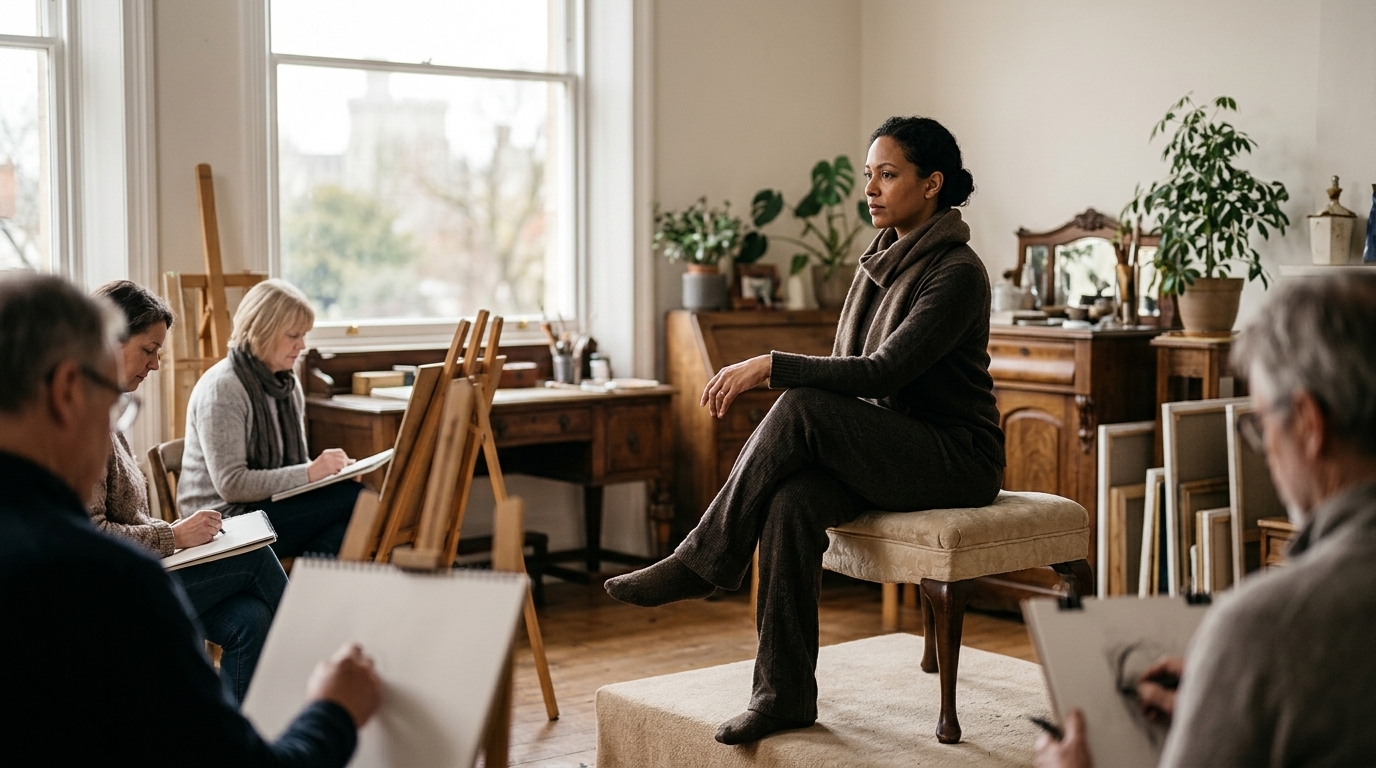
A Complete Guide to Professional Life Modelling
Life modelling, often referred to as artists’ modelling, is the practice of posing, typically unclothed, for artists, art students, sculptors, photographers, and educators to study the human form. Far beyond simply “holding still,” professional life modelling is a demanding, skilled art form with a rich history in art education and creative practice.
The Role of a Life Model
A life model provides artists with an authentic, three-dimensional reference for human anatomy, structure, gesture, and light. Models work across various mediums and disciplines, including:
- Life Drawing & Painting: Holding fixed poses ranging from rapid 1-minute gesture sketches to sustained poses lasting several hours or multiple sessions.
- Sculpture & 3D Media: Maintaining dynamic or structural poses for sculptors working in clay, plaster, or stone.
- Medical & Educational Illustration: Posing for anatomical studies, medical schools, and educational demonstrations.
- Private & Themed Events: Posing for workshops, structured creative groups, or social sessions such as hen parties.
Essential Qualities and Skills
While there is no single physical ideal for a life model—artists value diversity in age, body shape, physique, and background—professional modelling requires a distinct set of professional skills:
- Physical Stamina & Control: The ability to remain completely still in physically demanding or unusual poses without strain or movement.
- Body Awareness & Creativity: A strong understanding of form, line, and composition, allowing the model to offer dynamic, engaging poses suitable for the class theme.
- Punctuality & Reliability: Showing up on time and maintaining professional standards, as tutors and studios rely on models to run scheduled sessions.
- Professional Conduct: Maintaining clear communication, clear boundaries, and adherence to professional codes of conduct.
Industry Standards and Best Practices
Professional life modelling in the UK and worldwide operates under clear professional guidelines to ensure safety, respect, and fair compensation for models and employers alike:
- Auditions & References: Professional registers (such as the Society of Art) ensure standards by requiring auditioning or vetted references for listed models.
- Studio Conditions: Employers must provide warm, private, and comfortable environments, adequate break times, and safe spaces for changing.
- Fair Pay & Transparency: Transparent rates and clear expectations regarding session length, break times, and artistic requirements.
Getting Started as a Life Model
If you are interested in becoming a life model:
- Build a Portfolio & Profile: Register on central directories (such as the Society of Art at https://societyof.art) to showcase your availability, location, travel preferences, and pose strengths to local studios and tutors.
- Practice Posing: Work on holding static poses for 5, 10, and 20-minute intervals at home, focusing on controlled breathing and physical alignment.
- Connect with Local Studios: Reach out to local art groups, colleges, and independent life drawing organizers to offer your availability.